Training & Capacity Building
 Where Accuracy Meets Excellence
Practical Environmental Training for Industry, Research & Academia
Super Tech Environmental Services, supported by Super Tech Analytical Lab LLP, provides
practical and application-oriented training in environmental monitoring, laboratory
analysis, analytical instrumentation, pollution control, environmental assessment, and
technical research.
Our programmes are designed to bridge the gap between academic concepts and real-world
environmental applications through structured classroom learning, laboratory exposure,
field activities, case studies, instrumentation demonstrations, and technical guidance.
Training is tailored to the selected module, participant background, available
laboratory facilities, and specific institutional or professional requirements.
Primary CTA
Discuss a Customized Training Programme
Secondary CTA
Explore Training Programmes
Who Can Join
Training Designed for Students,
Researchers & Professionals
Use a responsive card/grid layout consistent with the existing website.
1. Colleges & Academic Institutions
Customized environmental training programmes, workshops, laboratory demonstrations and technical sessions for academic institutions.
2. Undergraduate Students
Suitable for students from Environmental Engineering, Civil Engineering, Chemical Engineering and related disciplines.
3. Postgraduate Students
Advanced practical exposure to environmental monitoring, laboratory analysis, research methodology and technical reporting
4. Environmental Science Students
Training in environmental pollution, monitoring, water quality, analytical techniques and environmental management.
5. Research & PhD Scholars
Technical exposure to laboratory methods, instrumentation, experimental work, data analysis and research documentation.
6. Laboratory Trainees
Practical understanding of sample handling, analytical procedures, instrumentation, calibration, quality control and laboratory practices.
7. Environmental Professionals
Skill development in environmental monitoring, regulatory requirements, technical reporting and environmental data interpretation.
8. Industry & Corporate Technical Teams
Customized training focused on environmental monitoring, compliance, pollution control and operational environmental management.
IMPORTANT CLIENT CONFIRMATION
Confirm with the client before publication whether school-level training is genuinely offered. If school-level training isn't offered, use:
"Colleges, Universities, Academic Institutions & Professional Training Programmes"
instead of prominently advertising school-level training.
Our Training Programmes
Build Practical Skills in Environmental
Science & Analytical
Techniques
01
Pollution & Environment
Understand major environmental challenges, their sources, impacts, monitoring approaches and practical solutions for sustainable environmental management.
Key Topics
- Fundamentals of environmental pollution
- Sources and types of pollution
- Air, water, soil and noise pollution
- Environmental impacts of pollution
- Pollution prevention and control
- Environmental monitoring concepts
- Environmental management practices
- Sustainable environmental solutions
- Environmental awareness and responsible practices
Practical / Application Component: Where applicable, participants may be introduced to environmental monitoring equipment, field observations, laboratory procedures and real-world environmental case studies.
Suitable For: Environmental Engineering, Civil Engineering, Chemical Engineering, Environmental Science students, researchers and environmental professionals.
02
Atmospheric Pollution
Develop an understanding of atmospheric pollutants, their sources, monitoring techniques, environmental impacts and pollution control measures.
Key Topics
- Fundamentals of air pollution
- Primary and secondary pollutants
- Particulate matter
- PM10 and PM2.5
- Gaseous pollutants
- Sources of atmospheric pollution
- Air-quality monitoring principles
- Sampling and monitoring techniques
- Pollution-control measures
- Interpretation of monitoring data
- Environmental and health impacts
Practical / Application Component: Demonstration and practical exposure may include ambient air monitoring equipment, sampling procedures, field data recording, basic data interpretation and quality-control practices, depending on the selected training programme.
03
Water
Learn the fundamentals of water quality, environmental water monitoring, sampling, testing methods and interpretation of water-quality results.
Key Topics
- Water-quality fundamentals
- Surface water and groundwater
- Water sampling
- Sample handling and preservation
- Physical and chemical water-quality parameters
- pH
- TDS
- Electrical conductivity
- Turbidity
- Hardness
- Alkalinity
- Chloride
- Sulphate
- Nitrate
- Dissolved oxygen
- BOD
- COD
- Water-quality interpretation
Practical / Application Component: Where applicable, practical exposure may include sample collection, sample preparation, laboratory analysis, analytical procedures and interpretation of water-quality data.
Important: Only advertise individual parameters as training activities where the laboratory has the appropriate capability and the parameter is included within the relevant programme/scope.
04
RESIDUES & CONTAMINATION IN WATER
Understand contaminants and residues present in water, their potential environmental impacts, analytical approaches and the importance of monitoring water quality.
Key Topics
- Sources of water contamination
- Industrial and domestic contaminants
- Chemical residues
- Contaminant pathways
- Environmental impacts
- Potential human-health implications
- Sampling considerations
- Analytical testing concepts
- Data interpretation
- Pollution prevention and control
Practical / Application Component: Case studies and practical examples may be used to demonstrate how contamination is identified, assessed and interpreted through environmental monitoring and laboratory analysis.
05
ANALYTICAL INSTRUMENTATION TRAINING
Gain practical exposure to modern analytical laboratory instruments, their operating principles, calibration procedures, sample preparation, maintenance and interpretation of analytical results
Training Components
- Instrument principles
- Instrument components
- Laboratory safety
- Sample preparation
- Standard preparation
- Calibration
- Calibration curves
- Quality control
- Analytical measurements
- Data interpretation
- Basic troubleshooting
- Instrument care and maintenance
Potential
Instrumentation Areas List instruments only after confirming
their current availability and suitability for training.
Potential instruments may include:
- UV-Visible Spectrophotometer
- Atomic Absorption Spectrophotometer (AAS)
- Flame Photometer
- GC-MS
- LC-MS
- ICP-MS
- Analytical Balance
- pH / TDS meters
- COD Digester
- BOD Incubator
- Muffle Furnace
- Hot Air Oven
- Other available laboratory equipment
IMPORTANT Do not advertise
hands-on training on an instrument simply because the instrument is present
in the laboratory.
The actual training scope should depend on:
- Instrument availability
- Laboratory scope
- Programme design
- Participant requirements
- Trainer availability
06
PROJECT WORK
Provide technical guidance and practical exposure for environmental engineering and related academic projects, with emphasis on research methodology, laboratory work, data collection and interpretation
Areas of Support
- Project topic identification
- Problem formulation
- Literature review
- Research methodology
- Experimental planning
- Environmental sampling
- Laboratory testing
- Data collection
- Data organization
- Statistical/data analysis
- Graphical presentation
- Result interpretation
- Technical report preparation
- Project presentation guidance
Present this service as: Project guidance + technical mentoring + laboratory/field exposure + research support
Do NOT present it as: "We complete projects for students."
07
DISSERTATION & RESEARCH GUIDANCE
Provide technical mentoring and practical research exposure for dissertation and thesis work in environmental science, environmental engineering and related fields.
Areas of Support
- Research topic identification
- Literature review guidance
- Research methodology
- Experimental design
- Laboratory analysis
- Environmental monitoring
- Instrumentation exposure
- Data analysis
- Result interpretation
- Technical discussion
- Report structure
- Research presentation
- Research documentation
Use wording such as: "Technical guidance and mentoring for dissertation and research work."
Do not imply that the laboratory or consultancy prepares, writes or completes academic dissertations on behalf of students.
Why Train With Us?
From Concepts to Practical Environmental Skills
Hands-On Practical Training
Practical exposure through laboratory activities, field demonstrations and technical exercises, depending on the selected programme
Experienced Technical Professionals
Training delivered by professionals with practical experience in environmental monitoring, laboratory analysis and environmental consultancy
Instrumentation & Analytical Exposure
Understand analytical principles, sample preparation, calibration, testing procedures and data interpretation.
Project and Research
Guidance
Technical mentoring for academic projects, dissertations and research activities.
Modern Laboratory Facilities
Exposure to laboratory infrastructure and analytical instrumentation, subject to the selected training module and laboratory scope.
Real-World Case Studies
Learn through practical examples, environmental projects, monitoring applications and real-world case studies.
Industry-Oriented
Learning
Training designed to connect academic knowledge with practical environmental monitoring, compliance and consultancy applications.
Customized Programmes
Training modules can be adapted according to institutional, academic, research or professional requirements.
Analytical & Environmental Expertise
Our Expertise in Analytical Services
01
Pollution & Environment
Environmental monitoring, pollution assessment and environmental management concepts.
02
Atmospheric Pollution
Air-pollution monitoring, pollutant identification, sampling concepts and control measures.
03
Water
Water-quality monitoring, sampling, testing and interpretation.
04
Residues & Contamination in Water
Understanding water contaminants, residues, analytical assessment and environmental impacts.
Practical Learning
Learn Through Practical Exposure
"Practical exposure is provided based on the selected training module, laboratory scope and participant requirements."
Potential practical components
include:
- Laboratory demonstrations
- Environmental sample collection
- Sample preparation
- Instrument demonstrations
- Analytical procedures
- Calibration exercises
- Environmental monitoring
- Field observations
- Data recording
- Data analysis
- Case-study interpretation
- Technical report preparation
Flexible Training Formats
Choose a Training Format That Fits Your Requirements
Classroom Training
Concepts, principles, regulatory awareness and technical fundamentals.
Laboratory Training
Practical exposure to analytical procedures, instrumentation and laboratory practices
Field Training
Environmental monitoring, sampling and field-based technical activities.
Workshops
Focused technical sessions around specific environmental topics.
Institutional Programmes
Customized programmes for colleges, universities and academic institutions.
Corporate Training
Customized environmental training for industrial and corporate technical teams.
Customized Programmes
Training designed around specific academic, research or professional requirements.
TRAINING DURATION
Flexible Programme Duration
"Programme duration varies according to the selected module, practical requirements and participant needs."
Possible formats:
- Short-term programmes
- One-day technical workshops
- Multi-day programmes
- Module-based training
- Internship-oriented programmes
- Customized programmes
Training Recognition
Certificate of Participation / Completion
Use the following exact wording:
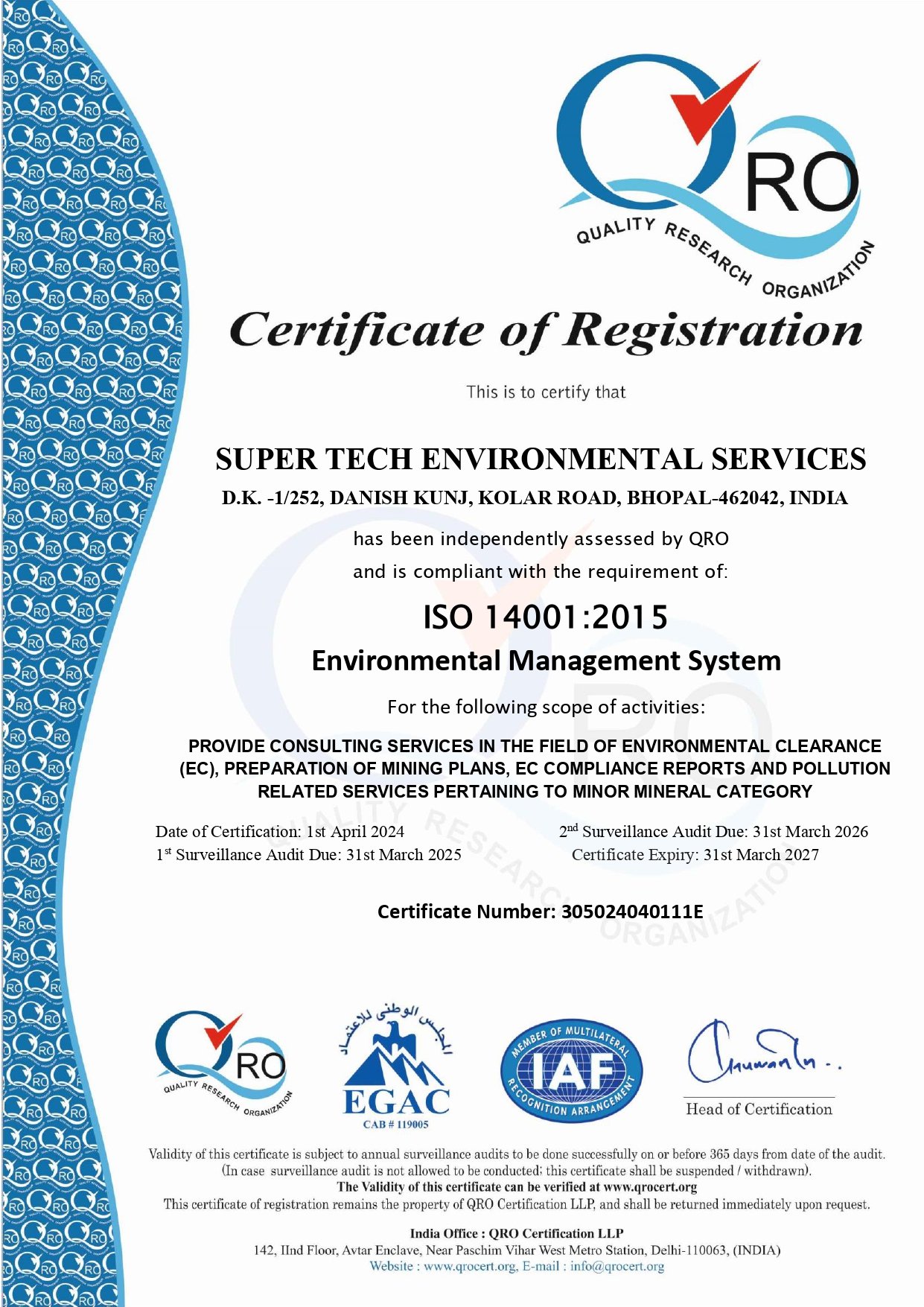
"Participants may receive a certificate of participation/completion, subject to the terms of the respective training programme."
Do NOT use:-
- 1. Government-approved training
- 2. Government-certified training
- 3. Accredited training
- 4. Statutory certification
unless separately verified and specifically approved by the client.
What You Will Gain
Develop Practical Skills for Real-World Environmental Applications
Use "may develop" or "participants gain exposure to" rather than guaranteeing specific competencies unless the programme is formally designed and assessed for those competencies.
Participants may develop an understanding of:
- Environmental monitoring fundamentals
- Pollution assessment
- Water-quality testing concepts
- Air-quality monitoring concepts
- Laboratory practices
- Analytical instrumentation
- Calibration and quality-control concepts
- Environmental data interpretation
- Field sampling practices
- Technical documentation
- Environmental regulatory awareness
- Research methodology
- Technical problem-solving
- Industry-oriented environmental practices
TRAINING JOURNEY
Add a simple four-step visual process using the
existing website's process
component.
01
Understand Your Requirement
Identify participant background, training objective, subject area and programme requirements.
02
Select the Training Module
Choose from environmental, analytical, instrumentation, field, project or research-oriented modules.
03
Learn & Practise
Participate in classroom sessions, laboratory exposure, field activities, demonstrations and case studies as applicable
04
Apply the Knowledge
Use the acquired knowledge for academic projects, research, professional activities or environmental applications.
Customized Learning
Training Designed Around Your Requirements
Customized training programmes can be developed for colleges, universities, research groups, laboratories, industries and corporate technical teams, subject to available facilities and technical expertise.
Training programmes can be structured according to:
- Academic curriculum
- Participant experience level
- Research requirements
- Laboratory requirements
- Industry requirements
- Environmental monitoring needs
- Instrumentation requirements
- Institutional objectives
PAGE-WIDE TRAINING DISCLAIMER
Training modules, practical exposure, instrumentation access, programme duration and certificate provisions are subject to the selected programme, laboratory scope, facility availability, trainer availability and participant requirements.
Get In Touch
Training Enquiry Form
Contact Information